


All-Inclusive vs. DIY Wedding Venues: What Are You Actually Paying For?

When you start touring wedding venues, it can feel like you’re comparing wildly different numbers. One venue is $4,000. Another is $12,000. Another tells you their package starts at $20,000, but it’s all-inclusive.
So obviously the $4,000 venue is the cheapest option… right? Maybe. But maybe not.
One of the biggest mistakes I see couples make when comparing wedding venues is looking at the initial price instead of looking at what that price actually includes. And to make things even more confusing, the term all-inclusive does not have one universal definition in the wedding industry.
An all-inclusive venue can mean nearly everything is handled for you. Or it can mean the venue provides tables, chairs and set up. Neither option is necessarily better or worse. But understanding exactly what you’re getting, and what you’ll still need to source, pay for, set up, and manage is incredibly important when choosing the right venue for your wedding.
First: What Does “All-Inclusive” Actually Mean?
The short answer? Whatever that particular venue decides it means. The wedding industry in general is very open-ended. So, there isn’t a universal checklist a venue has to meet before calling itself all-inclusive.
At one venue, an all-inclusive wedding package might include: the venue, tables and chairs, linens, tableware and glassware, setup and teardown, food & beverage, staffing, cake cutting, basic décor items, venue coordination.
At another venue, all-inclusive might simply mean your venue rental includes the tables, chairs, linens, tableware, setup and teardown, but you’re still responsible for hiring your own caterer, bartender, DJ, florist and other vendors.
And then there are venues that really do include everything but the kitchen sink. Those are called unicorns and they are really pretty when you find them! You might choose your menu, select from a few linen options, tell them your guest count and show up to a fully set room with food, bar, staffing, rentals and cleanup already handled.
That’s why the word itself isn’t nearly as important as the list underneath it. Don’t ask only, “Is this venue all-inclusive?” Ask: “What exactly is included?”
The Little Things Matter More Than You Think
It’s easy to focus on the big-ticket items. Venue? Check. Tables and chairs? Check. Catering? Check. Bar? Check.
But sometimes it’s the, seemingly, small things that create the biggest logistical headache. Let’s say a venue includes tables and chairs, but doesn’t include setup. Who is setting those 150 chairs for the ceremony? Who is moving tables into place? Who is putting linens on them? Who is setting chargers, napkins, flatware, glassware and menus? And then, at the end of the night, who is taking all of it back down?
Those aren’t necessarily reasons not to choose that venue. But they’re things you need answers to before signing the contract.
The same applies to linens. Maybe your venue provides tables, but linens aren’t included. Now you’re sourcing linens, figuring out sizes, choosing colors, paying for delivery or pickup, determining who will put them on the tables and figuring out what happens with the dirty linens at the end of the night.
One little missing line item can create five additional decisions. And that’s where comparing venues solely by price gets tricky.

All-Inclusive Isn’t Just About Saving Money
There’s another piece of this conversation that I think gets overlooked: you’re not only paying for things. Sometimes you’re paying for fewer things to manage.
There is value in knowing that when you arrive at your reception, the tables are already in place. The chairs are set. The linens are on. The glassware is polished. The bar is stocked. The catering staff knows the kitchen. And when the night is over, someone else is responsible for making it all disappear.
Could you potentially source some of those things for less money yourself? Absolutely. But cost isn’t the only currency in wedding planning. There is also your time, your mental load, the number of vendors you’re communicating with and the amount of responsibility being placed on you, your planner, your wedding party or your family. Sometimes paying more for a venue that includes more isn’t about being extravagant. It’s about making the process easier.
But Let’s Talk About That “All-Inclusive” Price
Here’s another place where you need to read beyond the headline number.
Let’s say Venue A advertises an all-inclusive package at $18,000. What does $18,000 actually mean? Does it include tax? Is there a service charge? Is gratuity included? Are there administrative fees? Is staffing included, or is that calculated based on your final guest count? Is there a minimum food and beverage spend? Does the price increase based on the entrée you select? Is alcohol included, or is that a separate package? Are there rental upgrades? Is setup included? What about teardown?
Suddenly, an $18,000 package might actually be significantly more once everything is calculated.
Another venue might quote you $22,000 and genuinely mean $22,000 out the door.
Again, neither pricing structure is inherently wrong. You just need to know which one you’re looking at. When you’re comparing venues, don’t compare the number at the top of the proposal. Compare the estimated final number at the bottom.
And Then We Have the DIY Wedding Venue
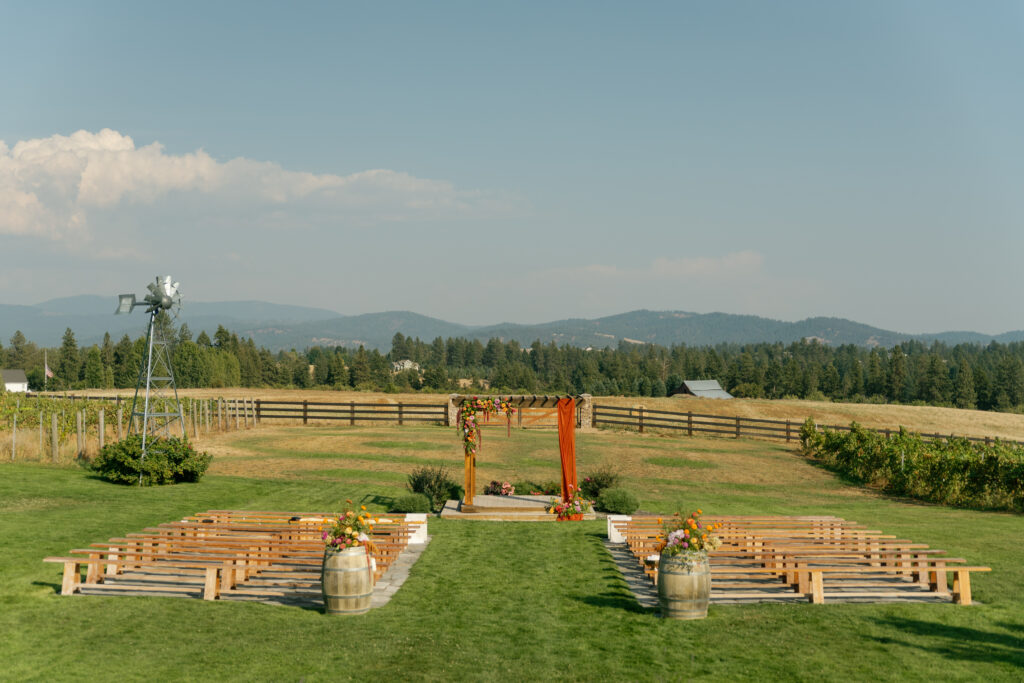
On the opposite end of the spectrum is what I lovingly call the “blank canvas”. Maybe you’ve found a gorgeous barn, private property, warehouse, garden or event space. The rental fee is $4,500. Compared to that $18,000 all-inclusive venue? SCORE.
Except… What comes with the $4,500? Because sometimes the answer is essentially: the building. And that can be a fantastic option, especially for couples who want complete creative freedom. But now we need to build a wedding inside/around it.
You may need:
- Tables & chairs
- Linens/napkins
- Tableware
- Serving equipment
- Catering
- Bar service/bartenders
- Ice
- Staffing (setup/teardown/clean up)
- Trash removal
- Lighting
- Power
- Restrooms
- Transportation
And depending on the venue, that list can get even longer. That $4,500 venue hasn’t suddenly become a bad deal. But it’s also probably not a $4,500 wedding venue anymore.
The DIY Venue Can Be Incredible… For the Right Couple
I don’t want this to sound like I’m trying to talk you out of DIY venues. Some of my favorite weddings happen in spaces where we essentially start from scratch. The benefit is freedom. You aren’t choosing between three linen colors because those are the ones included in your package. You aren’t limited to the venue’s chairs. You may be able to bring in your favorite caterer, build a completely custom bar, choose your rentals and create a space that feels entirely different from every wedding held there before yours.
For couples who care deeply about customization, that freedom can be worth every bit of additional planning. But flexibility comes with responsibility. Someone has to make all of those pieces work together. And the more pieces you’re bringing into a space, the more important logistics become.
Who is receiving the rental delivery? When can vendors access the venue? Does everything have to be removed that night? Where does the caterer prep? Is there enough power? Where does the ice come from? Who takes out the trash? Who lights the candles? These aren’t the glamorous questions. But they are the questions that can determine whether your wedding day feels seamless or chaotic.
So…Is All-Inclusive or DIY Better?
Neither. I know. Super helpful.
But truly. The better option is the one that aligns with your priorities, budget and the kind of planning experience you want. An all-inclusive venue might make sense if you value convenience, want fewer vendors to manage and like knowing that many of the logistical pieces are already handled. A more DIY venue might be perfect if customization and flexibility are incredibly important to you and you’re comfortable investing more time, or hiring the right professionals, to build the experience you want. And sometimes the sweet spot is somewhere in the middle.
A venue that provides the tables, chairs, linens, tableware, setup and teardown while still allowing you to choose your own catering, bar and creative vendor team can give you both flexibility and logistical support. That’s why I don’t think couples should choose a venue based solely on whether it calls itself all-inclusive. Choose it based on what is actually included, what you’ll still need to bring in and how those responsibilities fit into the wedding you want to plan.
Questions to Ask Before Comparing Wedding Venue Prices
Before deciding one venue is cheaper or easier than another, get answers to questions like:
- What exactly is included in the venue rental or package price?
- Are tables and chairs included?
- Who sets them up and puts them away?
- Are linens included? What sizes, colors and styles?
- Is tableware included?
- Is catering included or required through the venue? Are there food and beverage minimums?
- Is bar service included? Are bartenders and service staff included?
- What cleaning is required at the end of the night?
- Are taxes included in the quoted price?
- Are service charges, administrative fees or gratuity additional?
- Are there delivery, staffing or rental fees that aren’t reflected in the starting price?
- Are there required vendors?
- What items need to be removed at the end of the night, and who is responsible for them?
- What is the realistic estimated total based on your expected guest count?
Ultimately, you’re not trying to figure out which venue has the lowest starting price. You’re trying to figure out: what will it actually take in money, time, vendors and logistics to have our wedding here? That is the number worth comparing. And if one venue comes in a little higher but takes 15 things off your plate? That may very well be worth something, too.
Use my Wedding Venue Comparison Worksheet if you are like me and need something physical to be able to review your pros & cons!
Leave a Reply

Our monthly newsletter is a great way to stay up-to-date on all the happenings in the wedding community, get links to the most recent blog posts, and be the first to know when any new digital resources are released!
Stay up to date.