

From garden party attire to black tie, here’s how to dress for the celebration without second-guessing your outfit…
You’ve received the wedding invitation, marked your calendar, and RSVP’d yes. Now comes the next big question: What the heck am I supposed to wear? Maybe the invitation says cocktail attire. Maybe the wedding website mentions garden party formal. Or maybe there’s no dress code listed at all, and you’re left wondering whether your favorite sundress or trusty button-down will do the trick.
Don’t worry. Wedding dress codes aren’t meant to make getting dressed complicated. They’re simply a way for couples to communicate the overall feel of their celebration and help guests show up feeling comfortable, confident, and appropriately dressed.
Whether you’re attending a backyard wedding, a formal ballroom reception, or something in between, let’s break down what those dress codes actually mean.
Garden Party Attire
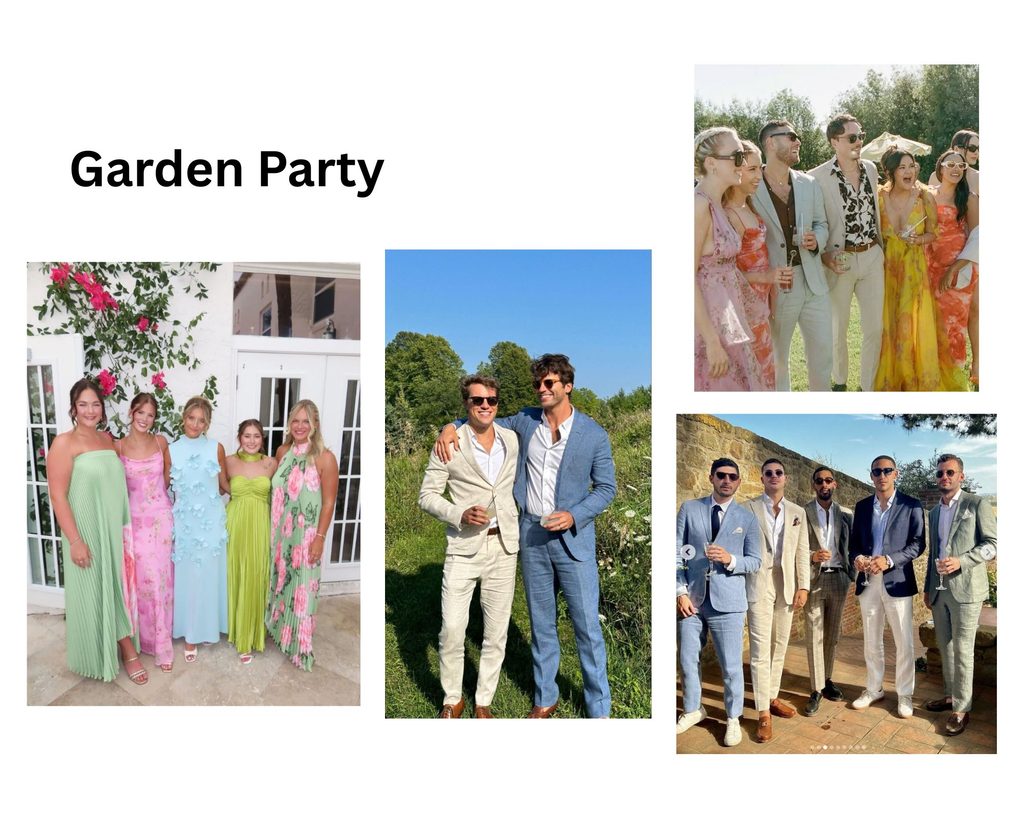
Think romantic, colorful, and a little playful. Garden party attire typically falls somewhere between dressy casual and cocktail, depending on the couple’s vision.
What to wear: Floral dresses, flowy midi or maxi dresses, jumpsuits, lighter-colored suits, linen blazers, dress pants, and button-down shirts are all great options. Soft colors, subtle patterns, and breathable fabrics fit beautifully with this style.
What to avoid: Jeans, shorts, athletic shoes, and anything that feels more appropriate for a backyard barbecue.
A little advice: If the ceremony or reception is taking place on grass, gravel, or another outdoor surface, consider block heels, wedges, or dressy flats instead of stilettos. Your ankles will thank you.
Dressy Casual (Casual, But Not Too Casual)
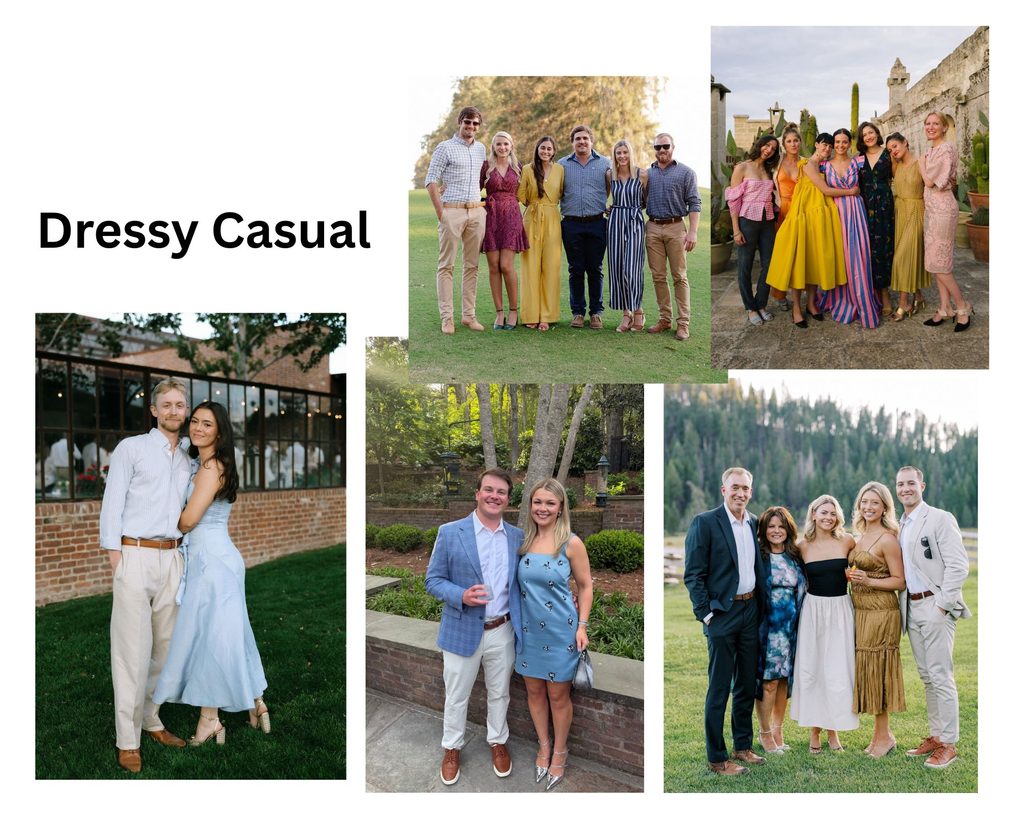
This is probably one of the trickiest dress codes because the word casual means something different to everyone. When couples request dressy casual attire, they’re generally asking guests to look put-together without feeling overly formal.
What to wear: Sundresses, midi dresses, dressy separates, jumpsuits, chinos, dress pants, collared shirts, and maybe a sport coat. A tie is usually optional and/or not expected.
What to avoid: Distressed denim, graphic T-shirts, flip-flops, athletic wear, and overly casual shorts.
A little advice: Think of an outfit you’d wear to a nice dinner or a special family celebration. Comfortable and relaxed, but still something you intentionally dressed up for. And remember, just because a wedding is happening in someone’s backyard doesn’t automatically mean jeans are appropriate!
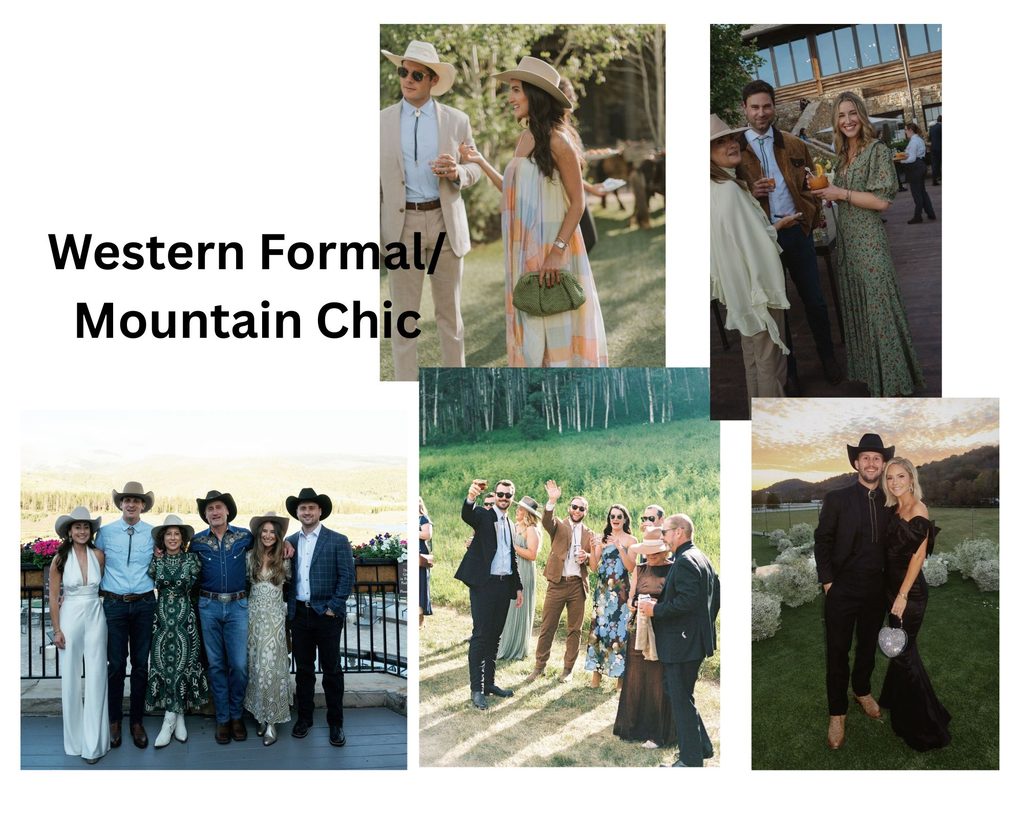
Western Formal / Mountain Chic Attire
Living in the Inland Northwest, this is one dress code we’re seeing more and more, especially because we have so many outdoor venues that involve some sort of barn structure. And while Western formal and mountain chic aren’t exactly the same thing, they share a similar idea: combining elevated wedding attire with a little rustic or Western personality.
What to wear: Midi or maxi dresses, jumpsuits, dress pants, pressed button-down shirt, maybe a sports coat, and nicer or polished Western boots. Depending on the couple’s vision, cowboy hats, bolo ties, leather accessories, and subtle Western details can be great additions.
For mountain chic, think rich earth tones, textured fabrics, elegant layers, and sophisticated outfits that feel at home in a mountain setting.
What to avoid: Everyday ranch clothes, distressed denim, work boots (we don’t need extra dirt or cow pies as additional “accessories”), graphic T-shirts, and anything you’d typically wear to do chores around the property. Generally, nice dark wash jeans are acceptable (with no holes), unless the couple specifically says otherwise.
A little advice: You don’t have to dress like a cowboy to attend a Western formal wedding! A beautiful dress with boots or a tailored suit with a bolo tie can be the perfect nod to the theme without feeling like you’re wearing a costume. And yes, a clean, polished pair of cowboy boots can absolutely be appropriate wedding footwear.
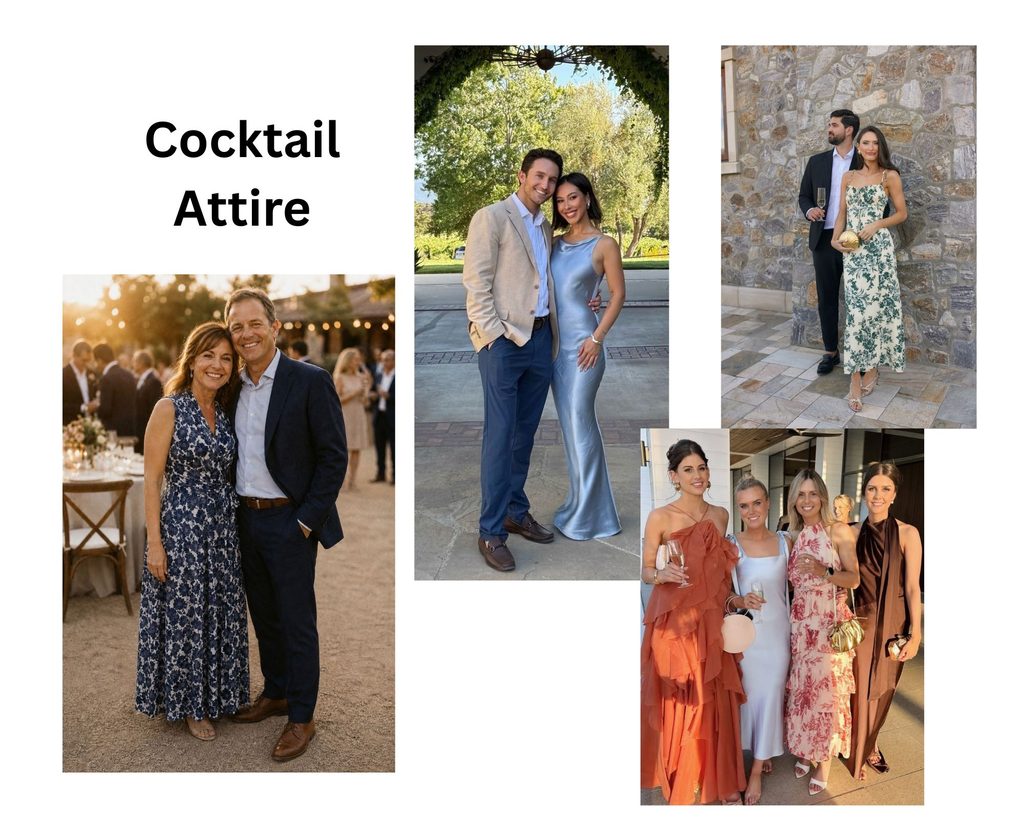
Cocktail Attire
Cocktail attire is one of the most common wedding dress codes, and for good reason. It strikes a balance between dressed up and comfortable enough to enjoy the party.
What to wear: Knee-length, midi, or sophisticated longer dresses, tailored jumpsuits, suits, dress shirts, and polished dress shoes. Darker or richer colors often work well for evening weddings, while lighter colors and playful patterns can be great for daytime celebrations.
What to avoid: Everyday casual clothing, jeans, sneakers, and outfits that feel more suited to a nightclub than a wedding.
A little advice: A floor-length dress isn’t necessarily too formal for cocktail attire, but it should feel less elaborate than a traditional formal gown. For suits, a tie is generally a safe choice, although it may not always be necessary.
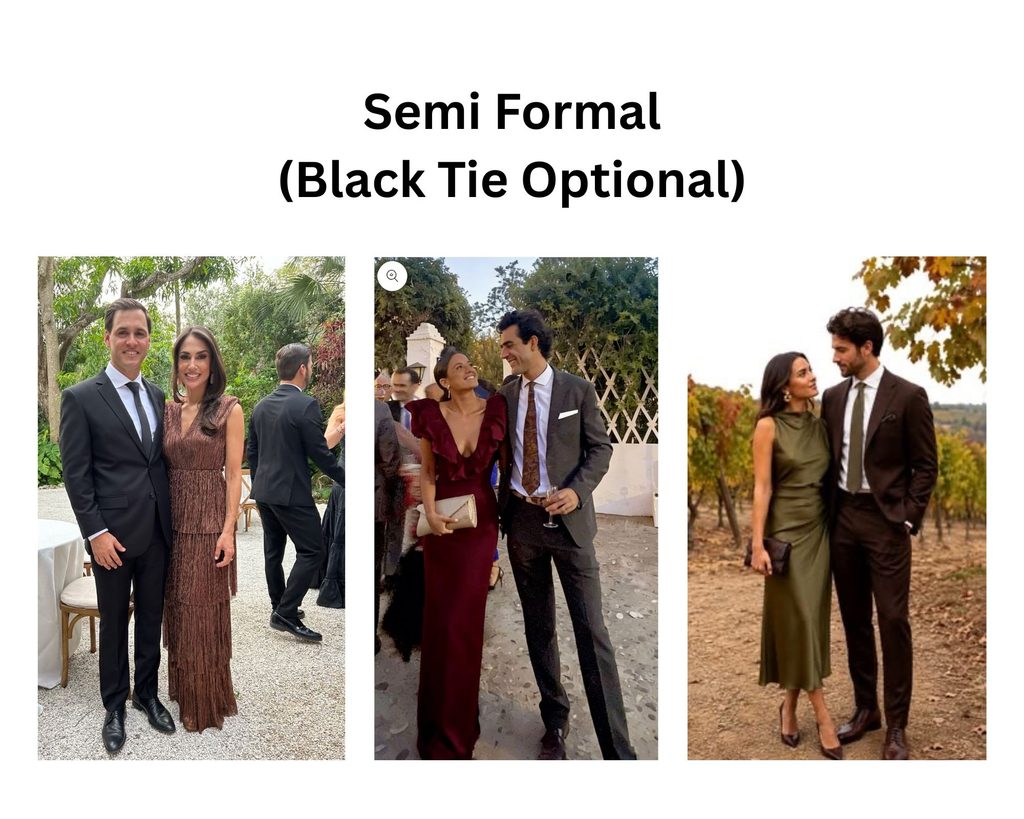
Formal Attire (Black Tie Optional)
Formal attire is where we start stepping things up a notch. You’ll sometimes see this listed as black tie optional, although the two aren’t completely interchangeable. Black tie optional specifically welcomes tuxedos while allowing guests to wear other suitably formal attire.
What to wear: Floor-length gowns, elegant formal dresses, sophisticated evening jumpsuits, dark suits with ties, or tuxedos. Fabrics like satin, chiffon, crepe, and velvet can help elevate the overall look. Heels are generally expected for ladies, but don’t feel like you need to wear a 4” stiletto heel if that is not something you can feel comfortable in for several hours. A lower heel or wedge is still appropriate!
What to avoid: Casual sundresses, chinos, jeans, and outfits that feel more appropriate for a daytime luncheon.
A little advice: You don’t necessarily need to purchase a brand-new gown or rent a tuxedo to attend a formal wedding. A well-fitting dark suit or an elegant dress you already own can absolutely work.
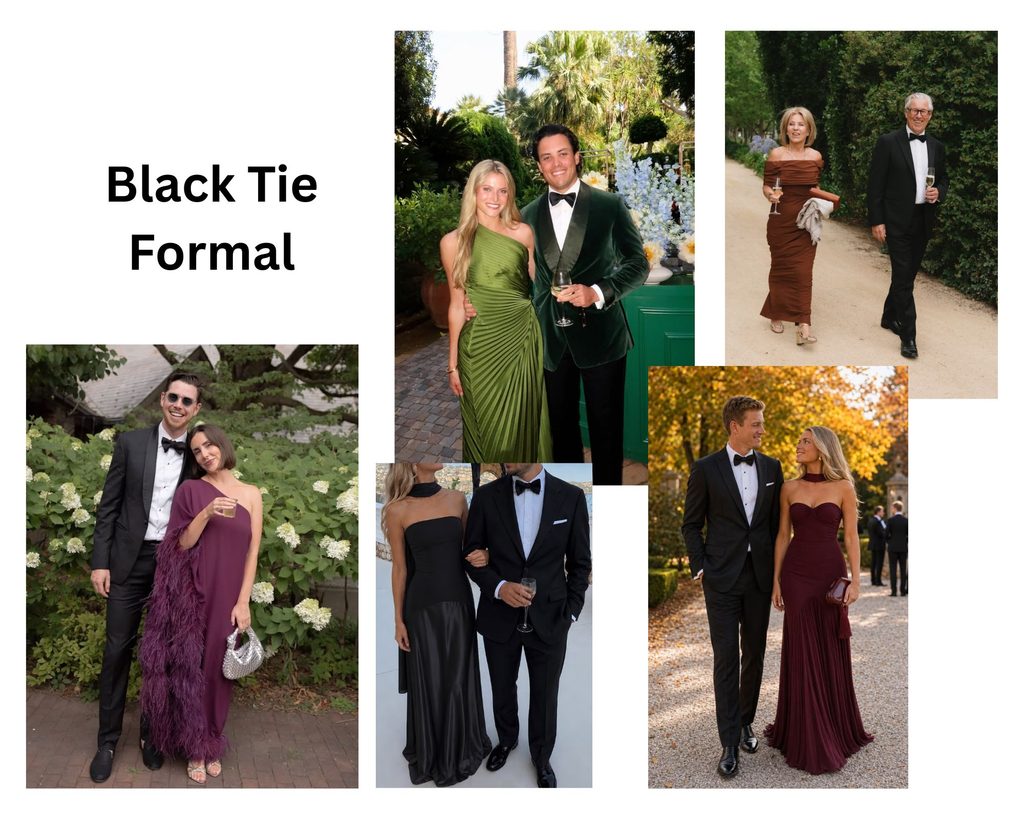
Black Tie Attire
When the invitation says black tie, it’s time to bring out the fancy stuff. Black tie is a traditional evening dress code and is generally the most formal wedding attire guests will encounter.
What to wear: Floor-length evening gowns, exceptionally formal eveningwear, and tuxedos with appropriate dress shirts, bow ties, and formal shoes.
What to avoid: Standard business suits, short casual dresses, everyday jumpsuits, and anything that doesn’t match the elevated nature of the event.
A little advice: Black tie doesn’t mean you have to wear black! Color is absolutely welcome unless the couple has specifically requested otherwise. It refers to the level of formality, not the color palette.
What If the Wedding Doesn’t Have a Dress Code?
This is where things can get a little more complicated. Not every couple includes a dress code on their invitation or wedding website. And while it would certainly make everyone’s lives easier, it doesn’t mean you have to panic.
Start by considering the venue, time of day, and overall style of the celebration. A Saturday evening wedding at a luxury resort will likely call for something dressier than an afternoon ceremony at a family residence. But remember, the venue alone doesn’t determine the dress code.
When in doubt, cocktail attire or polished dressy casual is often a safe starting point, depending on the setting.
Does It Matter Whose Wedding I’m Attending?
Here’s something I think is worth addressing: being a neighbor, coworker, distant relative, or close friend doesn’t automatically determine how formally you should dress.
If you’re attending your coworker’s black tie wedding, you should still dress for black tie. If you’re attending your best friend’s casual backyard wedding, you don’t need to show up in a tuxedo simply because you’re close. The couple’s requested dress code takes priority over your relationship to them.
That said, if you’re attending a wedding without a stated dress code and you don’t know the couple particularly well, there’s nothing wrong with asking for a little guidance.
A Few Wedding Guest Outfit Questions, Answered
Can I wear white to a wedding?
As a general rule, absolutely not! Avoid wearing white, ivory, or anything that could reasonably be mistaken for bridal attire unless the couple has very specifically requested it. Dresses with a small amount of white in a colorful pattern may be fine, but when in doubt, choose something else.
Can I wear black to a wedding?
Absolutely! Black is appropriate for most modern weddings, especially cocktail, formal, and black tie celebrations.
Can I wear jeans to a wedding?
Only if the couple has specifically indicated that denim is welcome. Even at a casual wedding, dress pants or chinos are generally a safer option.
Do I have to wear heels?
Not at all. Dressy flats, loafers, wedges, and polished low-heeled shoes are perfectly appropriate. Especially for outdoor weddings, where comfort and stability matter.
What if the couple requests a specific color palette?
Some couples request that guests wear particular colors to complement the overall aesthetic of their wedding. If they’ve communicated a color palette, try to honor it when reasonably possible. If you’re unsure whether it’s a request or a requirement, check with the couple (or their wedding planner).
What if I still don’t know what to wear?
Check the wedding website first! Couples often include dress code descriptions, inspiration photos, or other helpful details. If you’re still unsure, ask a member of the wedding party or someone close to the couple for clarification.
The Bottom Line: Dress for the Celebration
At the end of the day, a wedding dress code isn’t about making guests uncomfortable or forcing everyone into a particular style. It’s about setting expectations and helping everyone feel like they’re part of the same celebration. The best thing you can do as a guest is respect the couple’s wishes, consider the setting, and choose something that allows you to comfortably celebrate with them.
And if you’re a couple currently planning your wedding? Don’t underestimate the value of clearly communicating your dress code. A short description and a few visual examples on your wedding website can save your guests a whole lot of confusion. Because the last thing anyone wants is to spend the morning of a wedding wondering whether they misunderstood what garden formal means.
**all photos courtesy of Pinterest**
Leave a Reply

Our monthly newsletter is a great way to stay up-to-date on all the happenings in the wedding community, get links to the most recent blog posts, and be the first to know when any new digital resources are released!
Stay up to date.